
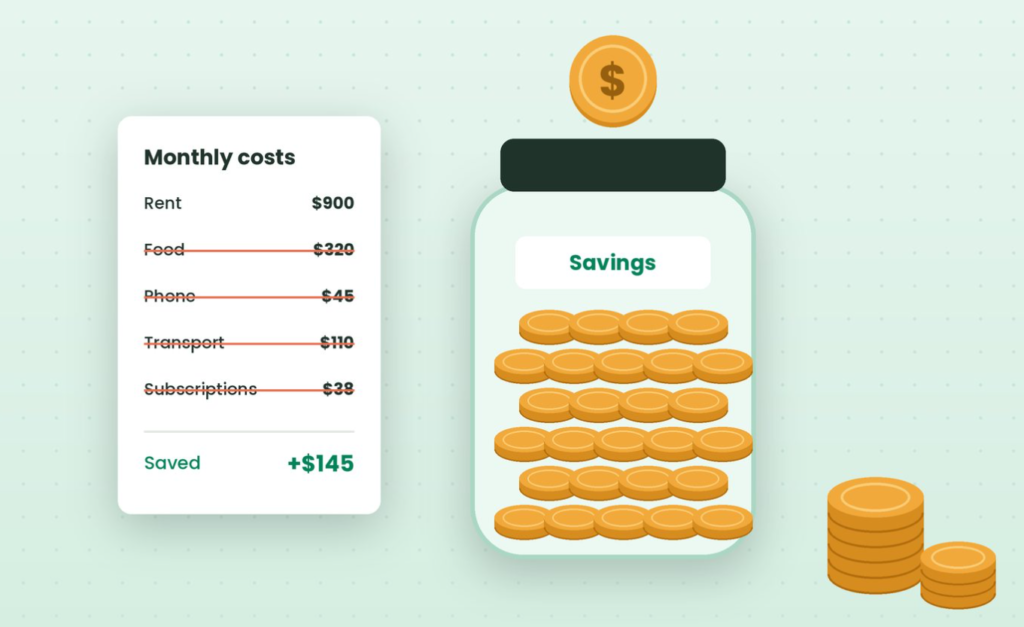
When money is tight, saving can feel impossible. Rent, food and bills take almost everything, and there is little left at the end of the month. The good news is that saving is a habit, not an amount. Even small, regular savings build a cushion that protects you from debt.
Key takeaways
- Start with a tiny, automatic amount — consistency matters more than size.
- Cut the three biggest costs first: housing, food and transport.
- Build a small emergency fund before anything else.
Step 1: Know exactly where your money goes
Write down every expense for 30 days, including small cash purchases. Most people find at least a few costs they did not notice, such as unused subscriptions, delivery fees or bank charges. You cannot cut what you cannot see.
Step 2: Pay yourself first — even a small amount
Set up an automatic transfer to a separate savings account on payday. Start with whatever feels painless: $5, $10 or 1% of your income. Once the habit is in place, increase it whenever your income rises.
Step 3: Cut your biggest costs first
Small savings on coffee help, but the biggest wins come from your largest expenses.
| Expense | Ways to save | Possible monthly saving |
|---|---|---|
| Housing | Shared housing, negotiate rent, move to a cheaper area | $100–$400 |
| Food | Plan meals, cook in batches, buy store brands | $50–$150 |
| Transport | Public transport, carpooling, sell a second car | $40–$200 |
| Phone & internet | Switch to a cheaper plan or prepaid SIM | $15–$50 |
Illustrative ranges only. Your savings will depend on your location and situation.
Step 4: Use the 24-hour rule
Before any non-essential purchase, wait 24 hours. Many impulse buys stop feeling necessary after a day.
Step 5: Build a starter emergency fund
Aim first for a small goal, such as one month of essential costs. This fund stops a broken phone or a medical bill from turning into expensive debt.
Step 6: Avoid high-interest debt
Credit cards, payday loans and “buy now, pay later” plans can quickly cost more than you save. If you already have debt, pay the highest-interest balance first.
Step 7: Look for extra income
- Sell items you no longer use.
- Take on occasional freelance or weekend work.
- Check whether you qualify for government benefits or tax credits.
Step 8: Use free resources
Libraries, community programs and free budgeting apps can replace many paid services.
Step 9: Track progress and celebrate small wins
Watching your savings balance grow, even slowly, keeps you motivated. Review your budget once a month and adjust.
Tip: Keep your savings in a separate account from your everyday spending. If you can’t see it, you’re less likely to spend it.
Frequently asked questions
How much should I save if my income is low? Start with any amount you can manage consistently, even $5 a week. Increase it as your situation improves.
Should I save or pay off debt first? Build a small emergency fund first, then focus on high-interest debt, then save more.
The bottom line
Saving on a low income is about small, steady steps. Automate a small amount, reduce your biggest costs and protect yourself with an emergency fund. Over time, those small amounts add up.
