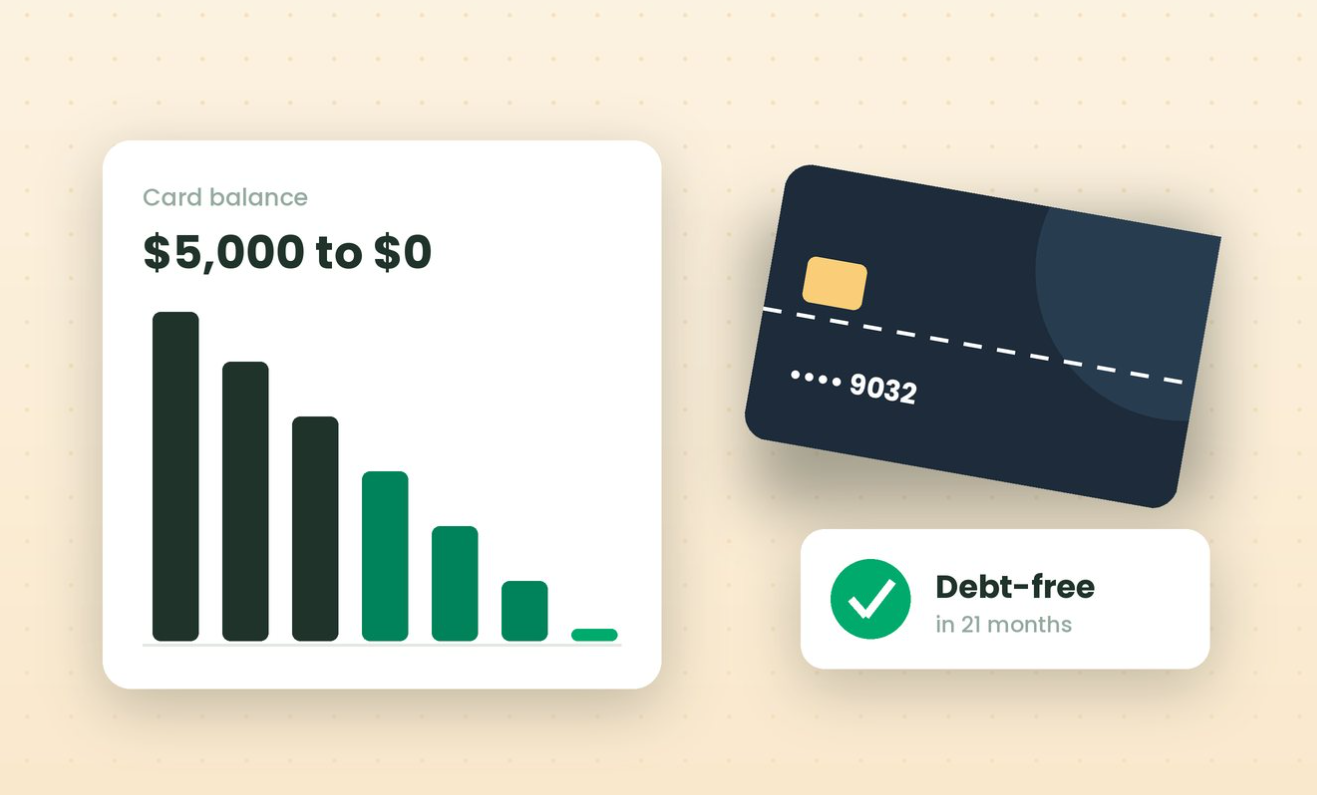
Credit card debt is one of the most expensive kinds of debt. With interest rates often above 20% a year, paying only the minimum can keep you in debt for many years and cost thousands in interest. The good news: with a clear plan, you can pay it off much faster.
Key takeaways
- Always pay more than the minimum payment.
- Target the highest-interest card first to save the most money.
- Stop adding new charges while you pay down the balance.
Step 1: List every balance and interest rate
Write down each card’s balance, interest rate (APR) and minimum payment. Seeing the full picture is the first step to a realistic plan.
Step 2: Choose a payoff method
| Method | How it works | Best for |
|---|---|---|
| Avalanche | Pay extra on the card with the highest interest rate first | Saving the most money on interest |
| Snowball | Pay extra on the smallest balance first | Quick wins that keep you motivated |
Both methods work. The avalanche method saves more money, while the snowball method can be easier to stick with. Pick the one you will follow.
Step 3: Pay more than the minimum
Minimum payments mostly cover interest. Even an extra $50 a month can cut years off your repayment time.
| Monthly payment on a $5,000 balance at 22% APR | Time to pay off | Total interest |
|---|---|---|
| $125 | About 6 years (73 months) | About $4,100 |
| $200 | About 2 years 10 months | About $1,750 |
| $300 | About 1 year 9 months | About $1,020 |
Approximate figures for illustration. Use your card’s own rate and a payoff calculator for exact numbers.
Step 4: Lower your interest rate
- Call your card issuer and ask for a lower rate, especially if you have a good payment history.
- Consider a balance transfer card with a 0% introductory rate. Check the transfer fee and pay the balance before the promotion ends.
- Look at a debt consolidation loan if its rate is clearly lower than your cards.
Step 5: Stop using the cards
Remove saved cards from shopping apps and use a debit card or cash for daily spending until the debt is gone.
Step 6: Find extra money for payments
Put tax refunds, bonuses and money from selling unused items straight toward your highest-priority card.
Step 7: Protect your progress
Build a small emergency fund alongside your repayments, so a surprise expense doesn’t go back on the card.
Caution: Be careful with debt settlement companies that promise to cut your debt in half. They often charge high fees and can seriously damage your credit score.
Frequently asked questions
Will paying off my cards improve my credit score? Usually yes. Lower balances reduce your credit utilisation, which is a major factor in most credit scores.
Should I close my credit cards after paying them off? Not always. Keeping an old card open with no balance can help your credit history, as long as it has no annual fee and you won’t overspend.
The bottom line
List your debts, pick a method, pay more than the minimum and lower your interest where you can. Steady, focused payments will make you debt-free sooner than you think.